プロダクト

プロダクト

ワンストップSIPコミュニケーション製品-メーカー直販

すべての製品

タッチポイント

タッチポイント

世界的な豊富なケースを持つ業界をリードする特殊通信プロバイダーです。当社の防爆&SIPディスパッチシステムは、プロジェクトを支える信頼できるパートナーであり、実績のある成功を収めています。

閲覧を続ける

トランスポーテーション

公共の安全

エネルギー産業

リソース

リソース

ベストプラクティスを発見し、革新的なソリューションを探求し、Beckeコミュニティ全体のパートナーとネットワークを構築してください。

お問い合わせ
知識について
2026-02-07 13:34:58
防爆電話と防爆評価およびガスグループのマッチングガイド
このガイドは、防爆電話の評価、ガスグループの区分、およびコアマッチングの原則の分類について詳しく説明しています。石油化学や石炭採掘などの危険な環境での一般的な落とし穴に対する実用的な選択手順と警告を提供します。GB/T 3836規格に基づいて、技術者や購買担当者が正確なマッチングを行い、安全な現場コミュニケーションを確保するのに役立ちます。

ベッケ・テルコム

防爆電話と防爆評価およびガスグループのマッチングガイド

防爆電話は可燃性・爆発性環境における中核的な通信機器です。その安全な稼働は、機器の防爆等級と現場に存在する危険ガスグループとの正確な適合に根本的に依存します。適合が不適切であると、防爆効果が失われるだけでなく、内部の電気火花や表面の高温により爆発を引き起こし、機器の損壊、死傷者の発生、生産停止につながる可能性があります。

現在、中国における防爆電話の防爆等級およびガスグループの分類は、国際規格であるIEC 60079に完全に整合した国家規格GB/T 3836シリーズを厳格に遵守しています。この統一化により、機器の互換性と稼働の安全性が確保され、B2B購入者や技術者に対して明確で信頼性の高い選定ガイダンスを提供しています。

防爆電話の防爆評定


I. 防爆電話の防爆等級に関する基本的理解

1.1 防爆区分の根拠と規格

防爆電話の防爆等級は、危険区域において周囲の爆発性雰囲気への着火を防止する能力を示す指標です。この区分は防爆形式と機器保護レベルによって決定され、GB/T 3836.1-2021『爆発性雰囲気-第1部:機器-一般要求事項』などの国家規格によって規定されています。本規格は2022年5月1日より、防爆電気機器の強制認証の中核的根拠となりました。

防爆電話に使用される一般的な防爆形式は以下の通りです。

  • 耐圧防爆構造(Ex d)

  • 本質安全防爆構造(Ex i)

  • 増安防爆構造(Ex e)

このうち、Ex d と Ex i が最も広く応用されています。

  • 耐圧防爆構造(Ex d):堅牢な筐体により内部爆発を封じ込め、外部雰囲気への火炎伝播を防止します。

  • 本質安全防爆構造(Ex i):回路エネルギーを制限し、正常時および故障時に発生する電気火花または熱効果によって爆発性混合物が着火しないことを保証します。

1.2 一般的な防爆表示とその意味

防爆電話の表示は通常、以下のフォーマットに従います。

Ex + 防爆形式 + ガスグループ + 温度グループ + 機器保護レベル(EPL)
例:Ex d IIC T4 Gb

各要素は重要な安全パラメータを示し、正しいガスグループの選定の基礎となります。

  • Ex:防爆表示であり、規格への適合を示す

  • 防爆形式(d、i など):防爆の構造原理

  • ガスグループ(例:IIC):危険ガス環境の種類

  • 温度グループ(例:T4):稼働時の最大表面温度

  • EPL(例:Gb):該当する危険区域(ゾーン1/ゾーン2)

使用場面により、防爆電話は一般的に以下のように分類されます。

  • グループI:炭鉱地下用(メタン環境)

  • グループII:炭鉱以外の爆発性ガス環境用

グループIIはさらにIIA、IIB、IICに細分され、レベルが高いほど防爆性能が強く、対応可能なガスの範囲が広くなります。


II. 危険ガスグループの分類と現場での特定

2.1 ガスグループ分類の基本基準

危険ガスグループは爆発性、特に着火感度と爆発リスクに基づいて分類されます。国際規格およびGB/T 3836シリーズでは、2つの重要なパラメータを用います。

  • 最大試験安全隙間(MESG)

  • 最小着火電流比(MICR)

これらのパラメータに基づき、爆発性ガス(炭鉱メタンを除く)はIIA、IIB、IICに分類され、グループIは炭鉱地下のメタン用に確保されています。

MESGの値が小さく、MICRが低いほど着火感度と爆発リスクが高く、より厳格な機器保護が必要となります。

代表的なガスとパラメータは以下の通りです。

  • グループIIA:プロパン、ガソリン、アセトン

    • MESG ≥ 0.9 mm、MICR > 0.8

    • 爆発性が最も低く、着火に必要なエネルギーが大きい

  • グループIIB:エチレン、コークス炉ガス、ジメチルエーテル

    • 0.5 mm < MESG < 0.9 mm、0.45 ≤ MICR ≤ 0.8

    • 爆発性は中程度

  • グループIIC:水素、アセチレン、二硫化炭素

    • MESG ≤ 0.5 mm、MICR < 0.45

    • 爆発性が最も高く、微小な火花でも爆発の可能性がある

2.2 業種別代表的なガスグループ分布

現場のガスグループを正確に特定することは、適切な機器選定の前提条件です。

  • 炭鉱業:主にグループIのメタン、微量のグループIIBガスを含む場合がある

  • 石油化学工業:IIA、IIB、IICの全般にわたる

    • 精製装置:主にIIA(ガソリン、軽油蒸気)

    • 化学反応装置:IIB(エチレン)を含む場合がある

    • 水素製造・貯蔵:IIC

  • 製薬業:大部分がIIA(アセトン、エタノール蒸気)、精密化学プロセスではIIBガスを含む場合がある

  • 冶金業:主にIIA・IIB、例:コークス炉ガス(IIB)


III. 防爆等級とガスグループの選定コア原則

3.1 基本的な選定ロジック

基本ルールは以下の通りです。

機器の防爆等級は、現場に存在する最も高い危険ガスグループと同等以上でなければならず、温度グループは当該ガスの最小着火温度を下回らなければならない。

安全な稼働には両条件の遵守が必須です。

ガスグループの観点から:

  • IIC機器:IIB・IIAと下位互換性あり

  • IIB機器:IIAのみ対応

  • 逆方向の使用は厳禁

例えば、IIB定格の電話を水素(IIC)環境で使用すると重大な爆発リスクが生じますが、IIC定格の電話は混合ガス環境やガス種が不明な環境でも安全に使用できます。

温度グループの観点から:
機器の最大表面温度は、ガスの最小着火温度を下回らなければなりません。
例:アセトアルデヒド蒸気環境(最小着火温度140 °C)では、T4機器(≤135 °C)は使用可、T3機器(≤200 °C)は使用不可です。

3.2 防爆形式別の選定の違い

防爆形式により適合特性が異なります。

  • 耐圧防爆構造(Ex d)
    IIA、IIB、IICガスに対応。IIC定格のEx d機器はGB/T 3836.2に基づき極めて厳しいフレームパス公差が要求されるため、粉塵が多い過酷な環境(炭鉱、製鉄所など)に適しています。

  • 本質安全防爆構造(Ex i)
    適応性に優れる。IIC定格のEx i電話は、水素・アセチレン環境や、頻繁な操作・複雑な配線が必要な場所(化学反応ゾーンなど)に最適です。

  • 増安防爆構造(Ex e)
    主にIIA・IIB環境に適用。IIC高リスク用途には推奨されない

3.3 よくある選定の失敗例

避けるべき一般的な誤り:

  1. 「高ければ高いほど良い」と思い込む
    IIC機器は高価であり、純粋なIIA環境で使用すると不要なコスト増となります。

  2. ガスグループと温度グループを混同する
    ガスグループが適合していても、温度グループが不適切では不十分です。

  3. 危険区域区分を無視する
    EPLは区域に適合させること。ゾーン1はGbゾーン2はGc


IV. 業種別選定事例

4.1 石油化学工業(IIAケース)

状況:石油精製工場の移載作業場、ガソリン・軽油蒸気(IIA)、着火温度280 °C、ゾーン2。
選定案Ex d IIA T3 Gc 防爆電話。油・粉塵環境に適し、温度・区域条件を満たします。

4.2 炭鉱業(グループIケース)

状況:炭鉱切羽、メタン(グループI)+微量IIBガス、ゾーン1、多湿・多粉塵。
選定案Ex i IIC T4 Gb 本質安全防爆電話、IP66保護。混合ガス・過酷環境に対応します。

4.3 精密化学工業(IICケース)

状況:水素貯蔵エリア(IIC)、着火温度560 °C、ゾーン1、高圧・腐食環境。
選定案Ex d IIC T4 Gb 耐圧防爆電話。堅牢な筐体で高い安全余裕を確保します。
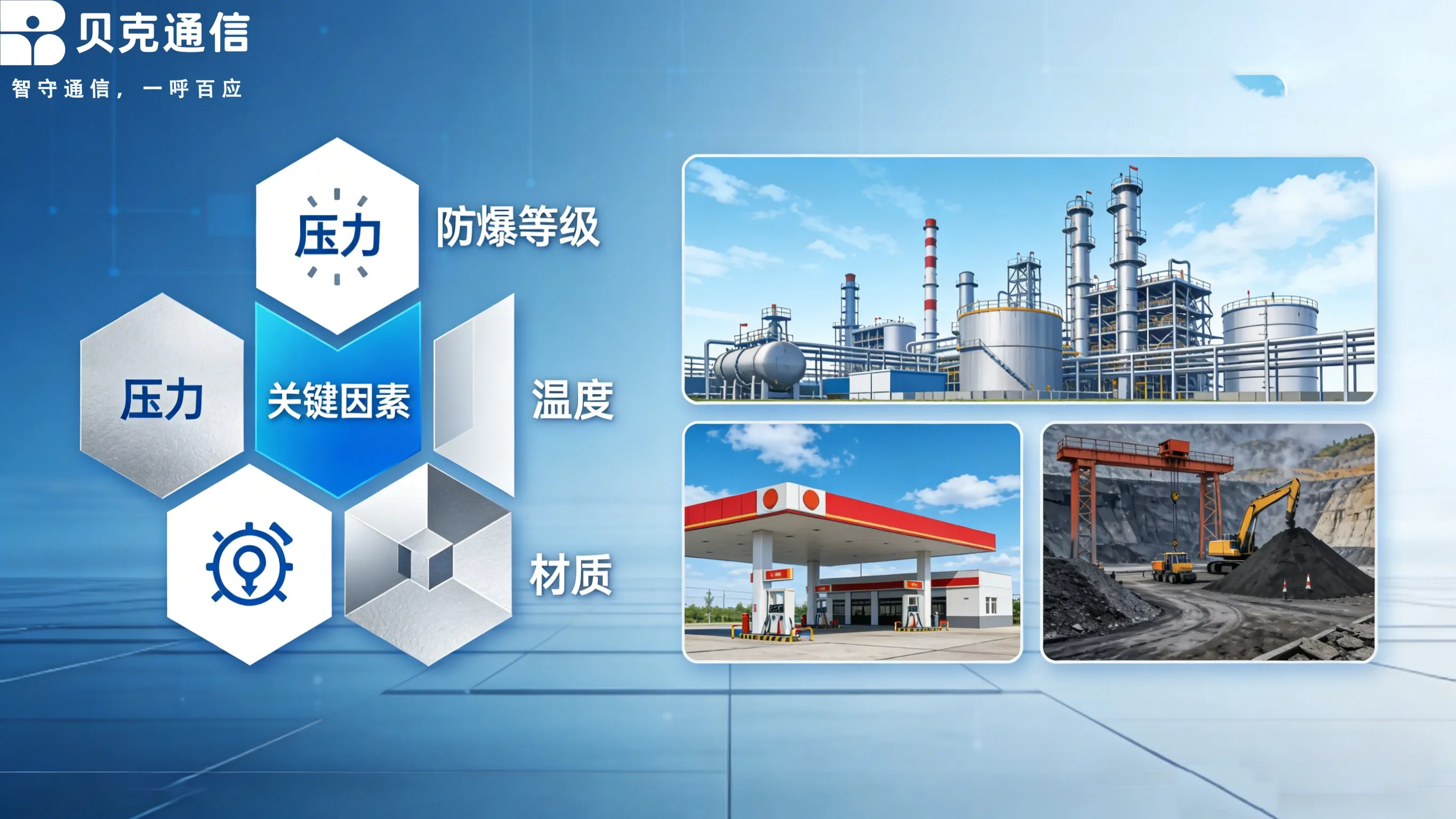
各業種における防爆電話の防爆評定に対する異なる要求


V. 実用選定ガイド:正しい防爆電話の選び方

5.1 3ステップ選定法

  1. ガスパラメータを確認:ガスグループ、最小着火温度、危険区域を特定する。

  2. 防爆形式・等級を選定:環境に応じEx dまたはEx iを選び、等級がガスグループを下回らないことを確認。

  3. 温度グループ・認証を検証:GB/T 3836規格への適合と有効な防爆証明書を確認。

5.2 技術的な主要確認ポイント

  • 防爆表示の完全性を確認

  • 認証書類・試験成績書を確認

  • 環境適合性を確保(粉塵・湿気対応としてIP65/IP66)

  • 配線の正確性を確認、特に安全バリアを用いる本質安全システム


VI. よくある質問(FAQ)

Q1:IIB定格の防爆電話をIICガス環境で使用できますか?
A:できません。IIBの保護ではIICガスに対応できず、重大な安全リスクとなります。

Q2:複数のガスグループが存在する場合、機器はどのように選べばよいですか?
A:最も危険性の高いガスに基づいて選定し、温度グループの適合を確保してください。

Q3:防爆等級とIP定格の関係は何ですか?
A:それぞれ独立しています。防爆は着火防止、IP定格は粉塵・水からの保護であり、両方を満たす必要があります。

Q4:輸入防爆電話を中国で直接使用できますか?
A:認証がGB/T 3836規格と互換性があり、現場条件に完全に適合する場合に限り使用可能です。


結論

防爆等級と危険ガスグループの正確な適合は、爆発性環境における安全な通信の基礎であり、B2B購入者・技術者にとって重要なスキルです。保護等級がガスグループを下回らず、温度グループが着火温度を下回ること、および正しい区域区分というコア原則を遵守することで、正確かつ規格適合な機器選定が実現できます。

過剰スペックや温度グループの誤解などのよくある失敗を避け、GB/T 3836シリーズに適合した認証取得製品を優先してください。正確な適合によって初めて、防爆電話は信頼性の高い通信を実現し、事故を防止し、産業生産を守ることができます。


ラベル:


Becke Telcomは、鉄道、トンネル、石油・ガス、海洋セクター向けの産業用防爆通信に特化しており、PA、インターホン、通話を統合したPAGA、SOS、IP電話を提供しています。


Copyright©2012-202 Becke Telcomすべての権利を保有します。

メッセージを残してください

何かご提案やご質問がございましたら、お気軽にお問い合わせください!

We use cookie to improve your online experience. By continuing to browse this website, you agree to our use of cookie.

Cookies

Please read our Terms and Conditions and this Policy before accessing or using our Services. If you cannot agree with this Policy or the Terms and Conditions, please do not access or use our Services. If you are located in a jurisdiction outside the European Economic Area, by using our Services, you accept the Terms and Conditions and accept our privacy practices described in this Policy.
We may modify this Policy at any time, without prior notice, and changes may apply to any Personal Information we already hold about you, as well as any new Personal Information collected after the Policy is modified. If we make changes, we will notify you by revising the date at the top of this Policy. We will provide you with advanced notice if we make any material changes to how we collect, use or disclose your Personal Information that impact your rights under this Policy. If you are located in a jurisdiction other than the European Economic Area, the United Kingdom or Switzerland (collectively “European Countries”), your continued access or use of our Services after receiving the notice of changes, constitutes your acknowledgement that you accept the updated Policy. In addition, we may provide you with real time disclosures or additional information about the Personal Information handling practices of specific parts of our Services. Such notices may supplement this Policy or provide you with additional choices about how we process your Personal Information.


Cookies

Cookies are small text files stored on your device when you access most Websites on the internet or open certain emails. Among other things, Cookies allow a Website to recognize your device and remember if you've been to the Website before. Examples of information collected by Cookies include your browser type and the address of the Website from which you arrived at our Website as well as IP address and clickstream behavior (that is the pages you view and the links you click).We use the term cookie to refer to Cookies and technologies that perform a similar function to Cookies (e.g., tags, pixels, web beacons, etc.). Cookies can be read by the originating Website on each subsequent visit and by any other Website that recognizes the cookie. The Website uses Cookies in order to make the Website easier to use, to support a better user experience, including the provision of information and functionality to you, as well as to provide us with information about how the Website is used so that we can make sure it is as up to date, relevant, and error free as we can. Cookies on the Website We use Cookies to personalize your experience when you visit the Site, uniquely identify your computer for security purposes, and enable us and our third-party service providers to serve ads on our behalf across the internet.

We classify Cookies in the following categories:
 ●  Strictly Necessary Cookies
 ●  Performance Cookies
 ●  Functional Cookies
 ●  Targeting Cookies


Cookie List
A cookie is a small piece of data (text file) that a website – when visited by a user – asks your browser to store on your device in order to remember information about you, such as your language preference or login information. Those cookies are set by us and called first-party cookies. We also use third-party cookies – which are cookies from a domain different than the domain of the website you are visiting – for our advertising and marketing efforts. More specifically, we use cookies and other tracking technologies for the following purposes:

Strictly Necessary Cookies
These cookies are necessary for the website to function and cannot be switched off in our systems. They are usually only set in response to actions made by you which amount to a request for services, such as setting your privacy preferences, logging in or filling in forms. You can set your browser to block or alert you about these cookies, but some parts of the site will not then work. These cookies do not store any personally identifiable information.

Functional Cookies
These cookies enable the website to provide enhanced functionality and personalisation. They may be set by us or by third party providers whose services we have added to our pages. If you do not allow these cookies then some or all of these services may not function properly.

Performance Cookies
These cookies allow us to count visits and traffic sources so we can measure and improve the performance of our site. They help us to know which pages are the most and least popular and see how visitors move around the site. All information these cookies collect is aggregated and therefore anonymous. If you do not allow these cookies we will not know when you have visited our site, and will not be able to monitor its performance.

Targeting Cookies
These cookies may be set through our site by our advertising partners. They may be used by those companies to build a profile of your interests and show you relevant adverts on other sites. They do not store directly personal information, but are based on uniquely identifying your browser and internet device. If you do not allow these cookies, you will experience less targeted advertising.

How To Turn Off Cookies
You can choose to restrict or block Cookies through your browser settings at any time. Please note that certain Cookies may be set as soon as you visit the Website, but you can remove them using your browser settings. However, please be aware that restricting or blocking Cookies set on the Website may impact the functionality or performance of the Website or prevent you from using certain services provided through the Website. It will also affect our ability to update the Website to cater for user preferences and improve performance. Cookies within Mobile Applications

We only use Strictly Necessary Cookies on our mobile applications. These Cookies are critical to the functionality of our applications, so if you block or delete these Cookies you may not be able to use the application. These Cookies are not shared with any other application on your mobile device. We never use the Cookies from the mobile application to store personal information about you.

If you have questions or concerns regarding any information in this Privacy Policy, please contact us by email at . You can also contact us via our customer service at our Site.