Oil and gas field operations occur in environments classified as Class I, Division 1 (per NEC 500) or Zone 0/1 (per IEC 60079-10-1), where methane (CH₄), hydrogen sulfide (H₂S), and light hydrocarbon mixtures frequently exist within explosive concentration ranges (10%–100% of the Lower Explosive Limit, LEL). In such high-risk settings, conventional intercom systems fail to meet the “ubiquitous, real-time, and reliable” communication criteria mandated by API RP 14C Recommended Practice for Analysis, Design, Installation, and Testing of Basic Surface Safety Systems for Offshore Service. Their limitations—limited coverage radius (<30 m), insufficient noise immunity (SNR < 15 dB), and lack of system integration—render them inadequate for modern safety-critical operations.
Explosion-proof public address and general alarm (PA/GA) stations have emerged as essential components of Safety Instrumented Systems (SIS), integrating intrinsically safe circuits, flameproof enclosures, directional audio amplification, and IP-based network communication into a single engineered terminal. According to China’s Ministry of Emergency Management 2023 Annual Report on Oil and Gas Safety, 68.3% of process safety incidents involved emergency communication delays exceeding two minutes, leading to personnel exposure in hazardous zones. Of these, 42.7% were directly attributable to communication dead zones or equipment failure. Facilities deploying IEC 60079-compliant PA/GA stations reduced average emergency response time from 4 minutes 58 seconds to 28 seconds, achieving a 98.5% personnel evacuation completion rate (China Petroleum Safety Engineering Research Institute, 2023).
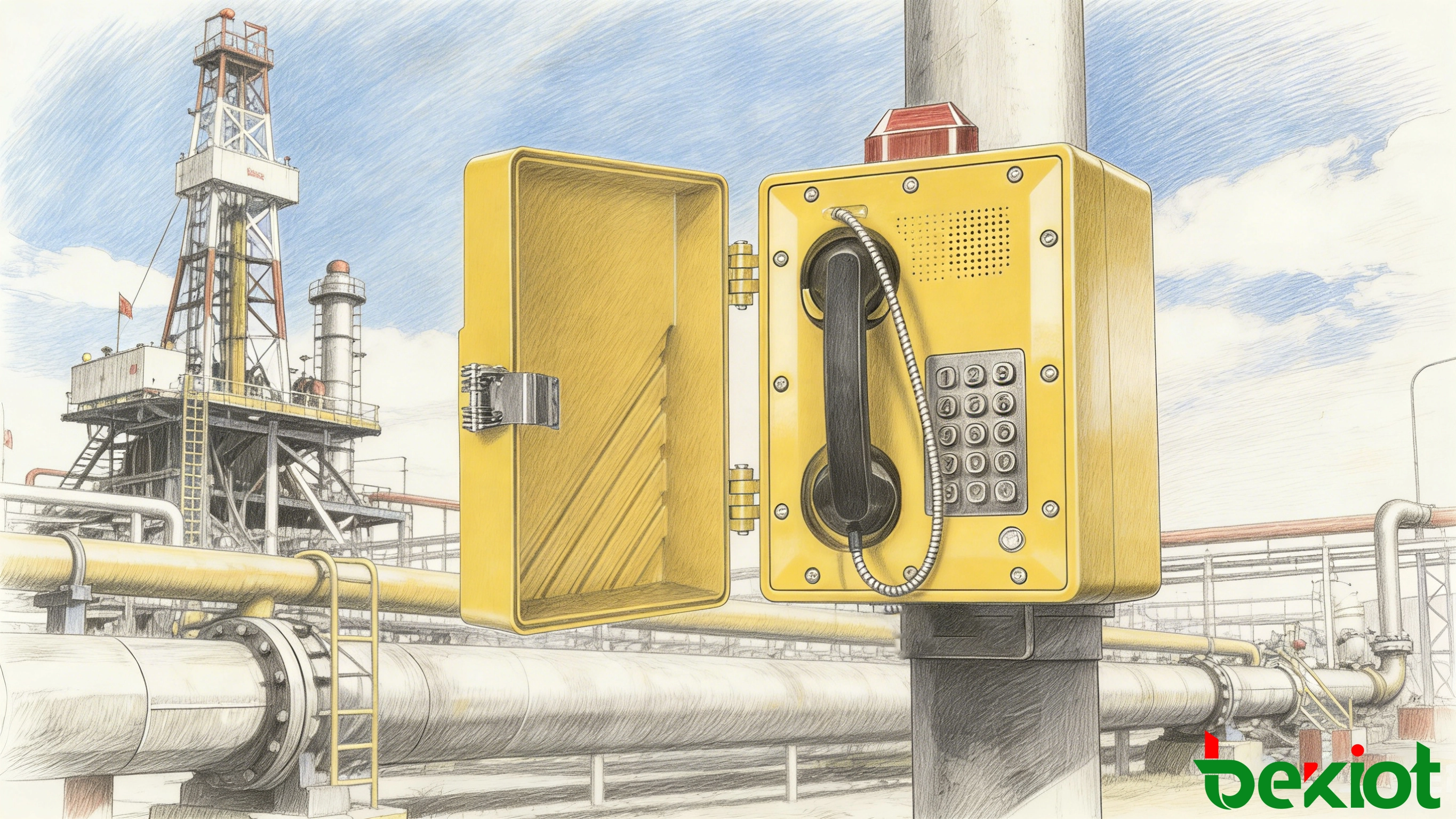
1. Technical Architecture and Core Subsystems
The functionality of explosion-proof PA/GA stations relies on the coordinated operation of six engineered subsystems, simultaneously satisfying requirements for explosion protection, acoustic performance, and network reliability.
1.1 Explosion Protection Subsystem: Compound Protection Design and Material Specifications
Hazardous area classification strictly follows IEC 60079-10-1:
- Zone 0: Continuous presence of explosive gas (e.g., inside sealed tanks)—requires Ex ia (intrinsic safety)
- Zone 1: Gas likely during normal operation (e.g., compressor rooms, valve manifolds)—requires Ex ib/db
- Zone 2: Short-term presence under abnormal conditions—may use Ex e (increased safety)
Modern PA/GA stations employ compound protection (dual-certified design):
- Intrinsically Safe Circuits (Ex ia/ib):
-
Energy limited to ≤0.25 J (IEC 60079-11:2019 Clause 5.2)
-
Isolation barrier withstands ≥500 Vrms, preventing fault propagation from non-hazardous areas
- Flameproof Enclosures (Ex d):
-
Material: 316L stainless steel (UNS S31603), yield strength ≥205 MPa (ASTM A276 compliant)
-
Construction: Flame gap at flange joints ≤0.5 mm; threaded engagement ≥6 threads (IEC 60079-1:2019 Table 3)
-
Pressure test: Withstands 2× internal explosion pressure (≥1.5 MPa for methane environments) without rupture
1.2 Acoustic Performance Subsystem: Speech Intelligibility in High-Noise Environments
Ambient noise levels in oil and gas facilities typically range from 85–115 dB(A) (ISO 1996-2), with dominant energy between 500–2000 Hz. Acoustic design must ensure:
- Loudspeaker Unit:
-
Power: 10W–50W RMS (IEC 60268-5)
-
Sound Pressure Level (SPL): ≥110 dB @ 1 m (pink noise input)
-
Frequency Response: 300 Hz – 5 kHz (covering critical speech bands)
- Microphone Array:
-
Dual-mic beamforming algorithm with Directional Index (DI) ≥6 dB
-
Background noise suppression ≥20 dB (Speech Transmission Index, STI ≥ 0.6 per IEC 60268-16)
- Coverage Modeling:
-
Effective radius ( R = \sqrt{\frac{P \cdot \eta}{4\pi \cdot I_0}} )
-
( P ): Acoustic power (W)
-
( \eta ): Electroacoustic efficiency (~0.8 typical)
-
( I_0 ): Reference intensity (10⁻¹² W/m²)
-
Field validation: A 50W station achieves ~320 m coverage at 95 dB ambient noise (STI > 0.5)
1.3 Network and Power Subsystem: High-Availability Communication Architecture
IP-based architectures support three primary deployment models:
|
Architecture Type |
Technical Specification |
Availability Metric |
Typical Application |
|---|
|
SIP over LAN |
RFC 3261, G.711/G.722 codec |
MTBF > 100,000 hours |
Onshore processing plants |
|
Dual Power (PoE + AC) |
IEEE 802.3at (30W), 220V AC ±15% |
Switchover < 10 ms |
Offshore platforms, FPSOs |
|
Fiber Ring Redundancy |
IEC 62439-3 PRP/HSR |
MTTR < 50 ms |
Critical safety zones (e.g., flare stacks) |
Power delivery increasingly leverages PoE++ (IEEE 802.3bt), providing up to 90W to support high-power speakers and anti-condensation heaters for cold-start operation at –40°C. Premium units integrate LiFePO₄ backup batteries (IEC 62133 certified), enabling ≥6 hours of operation during mains failure.
2. Application Scenarios and Functional Implementation
PA/GA stations fulfill roles across all three layers of API RP 14C’s safety strategy: prevention, control, and mitigation.
2.1 Emergency Response to Process Safety Incidents (Mitigation Layer)
Upon activation of the Gas Detection System (GDS)—e.g., H₂S ≥ 10 ppm—the PA/GA station executes an automated broadcast sequence:
- Signal Reception: Dry contact or Modbus TCP input from GDS
- Priority Handling:
-
Level 1 (LEL ≥ 20%): Zone-specific broadcast (“Gas leak in Area B, evacuate immediately”)
-
Level 2 (H₂S ≥ 50 ppm): Site-wide broadcast + central control room visual/audible alarm
- Multilingual Announcement: UTF-8 encoded dynamic switching among Chinese, English, Arabic (compliant with OSHA 1910.120(q)(6))
2.2 Daily Operational Coordination and Safety Intervention (Control Layer)
- Pre-Shift Safety Briefings: Automated playback of daily Job Safety Analysis (JSA) highlights at 06:00
- Equipment Status Alerts: Integration with DCS triggers localized announcements when compressor vibration exceeds 7.1 mm/s (ISO 10816-3)
- Mobile-Fixed Collaboration: Intrinsically safe mobile phones (Ex ia IIC T4) initiate SIP calls to fixed stations for last-mile communication
2.3 Emergency Drills and Compliance Validation (Prevention Layer)
Per NFPA 101 Life Safety Code Chapter 43, PA/GA systems enable:
- Automated Drills: One-click activation of simulated fire scenarios from central control, logging zone-wise response times
- Acoustic Coverage Verification: Class 1 sound level meters (IEC 61672) map SPL distribution; blind spots defined as STI < 0.3
- Self-Diagnostics: Daily 02:00 checks of amplifier impedance and microphone sensitivity, generating CSV logs
Industry Benchmark: A deepwater FPSO achieved 99% assembly compliance in drills, up from 76%, following system upgrade.
2.4 Natural Disaster Early Warning (External Threat Mitigation)
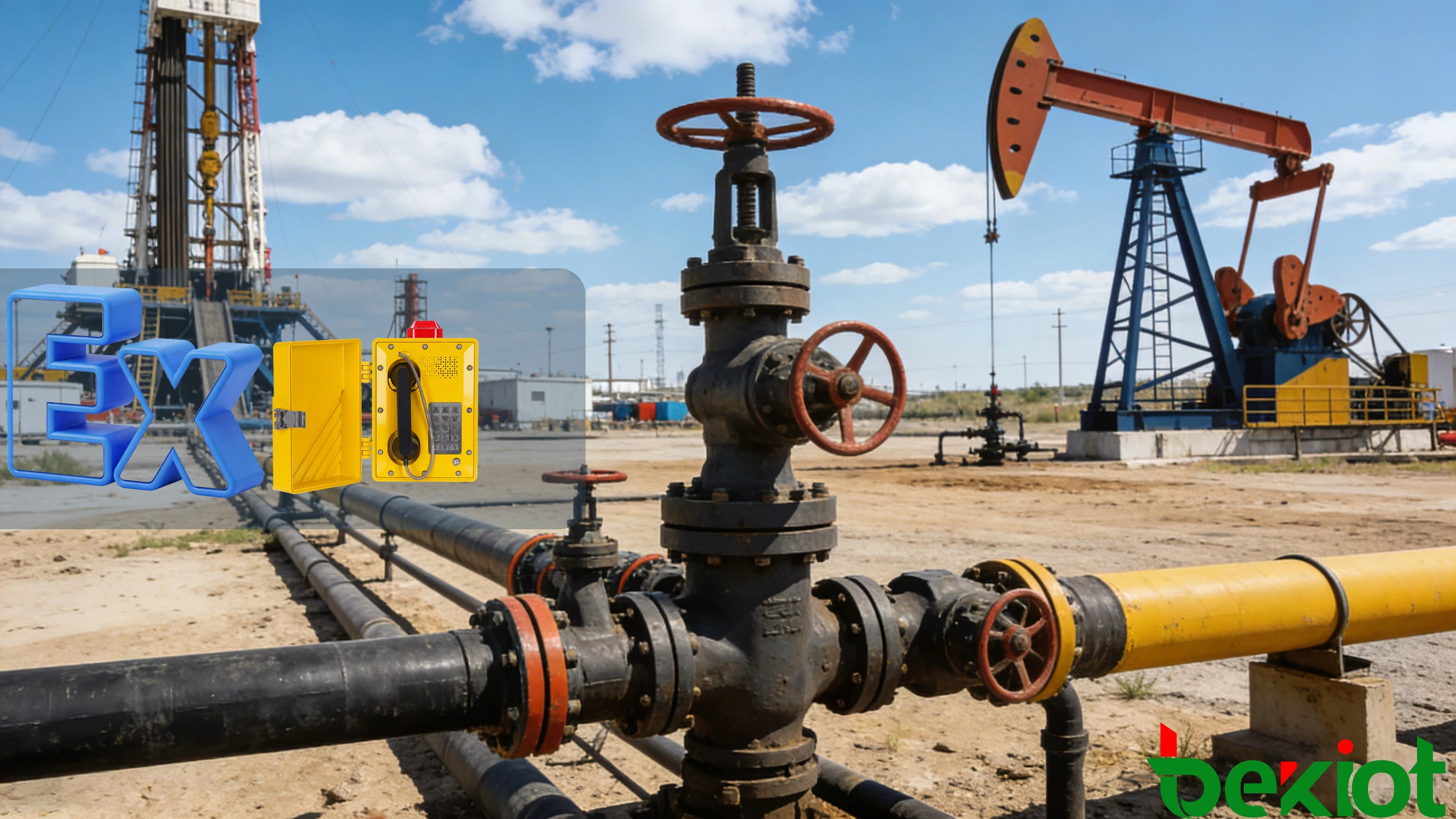
3. Compliance Certification Framework and Engineering Validation
Equipment selection requires verification against the following certification chain:
3.1 International Certification Schemes
|
Scheme |
Core Standards |
Key Parameters |
Engineering Significance |
|---|
|
ATEX |
2014/34/EU + EN 60079 |
Ex db ib IIC T6 Gb |
IIC group (hydrogen-compatible); T6 = surface temp ≤85°C |
|
IECEx |
IEC 60079 Series |
IECEx CoC Certificate |
Global mutual recognition, avoids redundant testing |
|
NEC |
UL 1203 / CSA C22.2 No. 30 |
Class I, Div 1, Grp C/D |
Mandatory for North American markets |
3.2 Mandatory Chinese Requirements
- Explosion-Proof Certificate: Issued by NEPSI, certificate format “CNEX23.XXXXX”; full Ex marking (e.g., Ex d[ia] IIC T6 Gb) required on nameplate
- CCC Certification: Required if power adapter is included (per 2023 Compulsory Product Catalog)
- Marine Environment Add-ons:
-
Salt spray test: GB/T 2423.17-2008, 500h with no red rust
-
Ingress Protection: IP66 (GB/T 4208-2017), resistant to powerful water jets
3.3 Environmental Robustness Validation
|
Parameter |
Test Standard |
Acceptance Criteria |
Test Method |
|---|
|
Temperature Range |
GB/T 2423.1/-2-2008 |
Functional at –40°C to +70°C |
200 thermal cycles |
|
Vibration Resistance |
GB/T 2423.10-2019 |
5–500 Hz, 2g RMS |
Sine sweep + random vibration |
|
Corrosion Rating |
ISO 12944-2:2017 |
C5-M (marine industrial) |
1000h salt fog + SO₂ test |
|
EMC Immunity |
GB/T 17626.2-2018 |
±8kV contact discharge |
IEC 61000-4-2 Level 3 |
4. Engineering Deployment Strategy and Selection Matrix
4.1 Onshore Processing Plants / Central Facilities
- Environment: Large footprint (>1 km²), multiple noise sources (compressors, flares), stable grid
- Technical Configuration:
-
Loudspeaker: 50W horn-loaded, Q=8 directivity (120° horizontal coverage)
-
Protocol: SIP over 100BASE-TX, integrated with Cisco Unified CM
-
Mounting: Pipe rack brackets at 4.5 m height, spacing ≤400 m (based on acoustic attenuation model)
- Compliance Focus: Ex d[ia] IIC T6 Gb + IP66
4.2 Offshore Platforms / FPSOs
- Environment: Space-constrained, high salinity (Cl⁻ > 300 mg/m²/day), platform motion (±15° roll)
- Technical Configuration:
-
Enclosure: Monolithic 316L casting, 100% PT-inspected welds
-
Power: PoE++ (802.3bt) + 24V DC dual input, 10Ah backup battery
-
Corrosion Protection: Thermal-sprayed aluminum (TSA) + epoxy coating (DFT ≥320 μm)
- Compliance Focus: ATEX + DNVGL-ST-N001 marine certification
4.3 Pipeline Valve Stations
- Environment: Unmanned, –40°C winters, maintenance intervals >6 months
- Technical Configuration:
-
Low Power: <3W standby, 120W peak solar input
-
Remote Management: HTTPS Web GUI with OTA firmware updates
-
Wireless Backup: LoRaWAN for status telemetry (battery voltage, temperature)
- Compliance Focus: Ex ib IIC T4 Ga (intrinsically safe for Zone 0)
5. System Integration and Intelligent Evolution
5.1 Deep Integration with Safety Instrumented Systems (SIS)
- GDS Interfacing: HART or Foundation Fieldbus inputs (4–20 mA), latency <100 ms
- Video Fusion: ONVIF Profile S enables automatic RTSP stream retrieval from Axis cameras upon alarm
- Personnel Tracking: UWB tags (e.g., Decawave DW3000) provide ±10 cm location accuracy, enabling personalized instructions via nearest station
5.2 Roadmap for Intelligent Capabilities
- 2024–2025: AI-powered noise cancellation using CNNs to suppress compressor harmonics in real time
- 2026–2027: Digital twin integration for 3D visualization of acoustic coverage
- 2028+: 5G RedCap terminals supporting uRLLC (ultra-reliable low-latency communication)
Conclusion
Explosion-proof PA/GA stations in oil and gas operations have evolved from standalone communication terminals into critical execution units within Safety Instrumented Systems. Their engineering value extends beyond acoustic coverage to enabling closed-loop “sense-decide-actuate” workflows compliant with API RP 14C and IEC 61511. For B2B procurement teams, certification completeness is a legal baseline, while scenario-specific adaptability drives total cost of ownership (TCO) optimization. For engineers, acoustic modeling fidelity and integration depth determine solution efficacy. For safety managers, seamless fusion of routine operations and emergency capabilities is key to improving process safety performance. Only through rigorous, standards-based selection and deployment—grounded in data and field experience—can these systems truly serve as lifelines in high-hazard environments.

 English
 Deutsch
 한국어
한국어 Русский
 Français
 日本語
日本語 لالعربية
 हिन्दी
 Español
 Português
 繁体中文
繁体中文 简体中文
简体中文

 知識について